

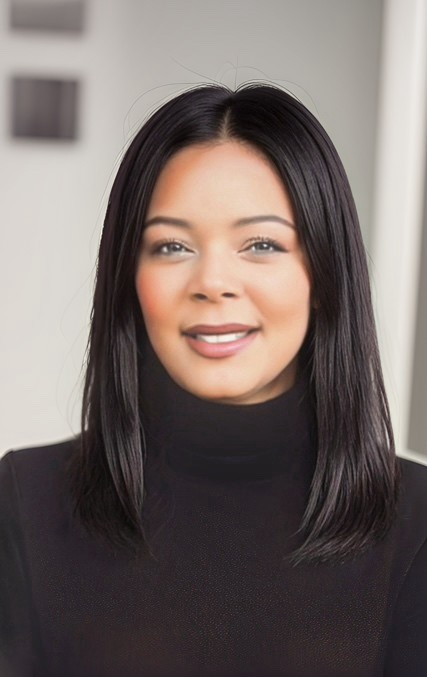
I was 40 when my sister died at the age of 47. She left behind a six-year-old boy who needed his mother. Just a week before her sudden passing, he had been told he was adopted—that his birth mother had died. And then Lauren was gone, in her sleep.
Our family was heartbroken, stunned by the suddenness of it all. I had flown into Taos, New Mexico that morning to visit, just two days before Thanksgiving.
My father carried that loss for seven years before it carried him.
My mother was at times strong and present - in her naturally quiet, kind, loving way - other times I could see her broken and torn, missing her husband and daughter, but holding on for her grandchildren and children. She would pass just eight years after her husband of nearly 60 years.
My younger brother (a cousin raised by my parents) a year after my mother died.
They were healthy. Hardworking. Good people. Didn't drink, smoke, do drugs - ever. Lived well, treated themselves and others with love and care. It didn't make sense.
I grew up mostly in sunny, beautiful Southern California. It was idyllic. Some of you Gen X'ers can relate. Weekend barbecues with family friends, Saturdays at Zuma Beach, summers where you'd run the streets all day, come home exhausted, and do it all again. My family was the constant — even as adults, Sunday brunches filled with laughter and my mother's music.
And they were all gone.
My older brother and I were at a loss. My nephew—wise beyond his years—handled it in the way he handled the loss of his grandfather - stoic. William had spent years in therapy at the urging of a mental health professional who told us the day Lauren died to, "get him support now so he’s not in my office at 17, angry and carrying far more than grief."
William moved through his grief with a quiet strength that humbled me. Some people are simply built closer to truth. He is one of them. He, along with my son and my soon-to-be husband, became one of the guiding lights that carried me through as we, as a family, faced our pain and sorrow together.
I kept going. I kept performing. I kept showing up.
Until I couldn’t.
It was my mother’s death that finally broke me. Not the first loss, not the accumulation — hers. Something in me that had held through everything else simply gave way. I stepped away from everything, allowed myself to fall apart in the way grief had always been demanding I do — and then, when I was ready, I got the support I needed to move forward.
Not around it. Not over it. Through it.
I did the work. All of it. The hard, slow, unglamorous work of putting yourself back together after losing nearly everyone you came from.
And then I lost Zane.
Our beloved golden retriever. Five years old. The sweetest dog on the planet — and if you knew him, you would not think that was an exaggeration. After everything I had been through, after all the work I had done to become whole again, losing him brought me to my knees in a way I did not see coming.
I wanted to give up.
And then, on May 20, 2026, my older brother — my last living immediate family member — died unexpectedly in my home, where he had been living. He had just retired and was three days away from receiving his first retirement check.
Once again, grief arrived asking everything of me.
I tell you this not for sympathy. I tell you this because grief does not follow a hierarchy. It does not care that you have already done the work, already paid the price, already rebuilt yourself once. It arrives when it arrives. And it asks everything of you every single time.
What I learned in those moments — through devastating loss, again and again — is that the method works. Not because it makes loss smaller. But because it gives you somewhere to stand when the ground disappears.
That process became this method.
An editor once told me I had a natural instinct for knowing what needed to go — seeing it clearly, removing it, moving forward. What began as professional instinct became personal survival. And eventually, the foundation of everything I build with clients today: learning what to release, and how to move ahead with intention and grace.
Out of deep loss came deeper purpose.
My framework is where strategy meets soul. A structured process for the leader, executive, or high achiever who is ready to return, reframe, and reclaim — after the kind of loss that changes how you see everything.
I hold a Bachelor of Communications from Loyola Marymount University and a Master of Arts in Journalism from the University of Missouri-Columbia. I am a licensed financial professional, a certified grief coach, a certified leader in professional business relationships, and a trained spiritual practitioner. The work I do is grounded in Stoic philosophy, ancient wisdom, and modern thinking.
My biggest loves? My two sons and the most loving, supportive husband. We spend our time between Southern California and France.
You will be challenged. But it works.
I am proof you can come through grief stronger — as both a human and a leader.
Leah holds a Master’s degree in Journalism from the University of Missouri–Columbia and a Bachelor of Arts in Communication Studies from Loyola Marymount University. She is a Certified Leader in Professional Business Relationships through PeopleTek and holds certifications in Grief Coaching through an ICF-accredited coaching education provider, as well as a Coach of Life Success certification through the CLS Companies ACC-approved program.
Leah is married to the love of her life, and together they divide their time between the suburbs of Los Angeles and his native France. She is the proud mother of two sons and, outside of her work, enjoys gardening, traveling, reading, and spending time with her family, beloved golden retriever, Knox.
Facebook
Instagram
Youtube
TikTok